
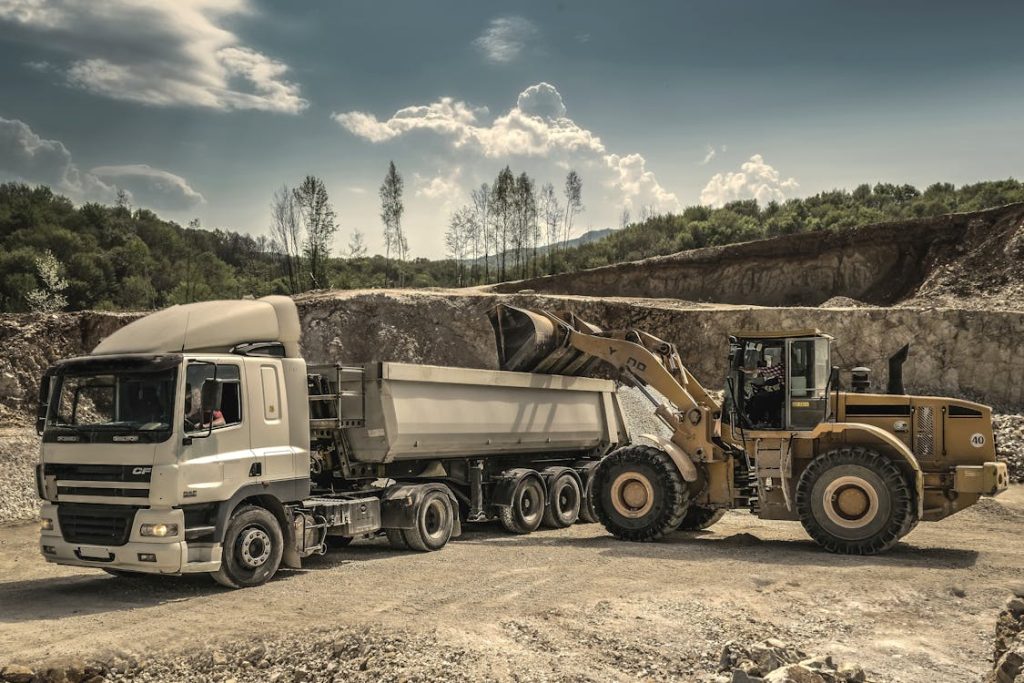
Aggregate factoring is a specialized invoice factoring service that provides immediate cash flow to construction material haulers, dump truck operators, and aggregate transporters by purchasing their unpaid invoices at a discount. This financial solution addresses the 30-90 day payment delays common in construction material hauling, allowing operators to maintain steady cash flow for fuel, equipment maintenance, payroll, and other operational expenses without waiting for customers to pay.[1]
Aggregate factoring is a specialized invoice factoring service that provides construction material haulers, dump truck operators, and aggregate transporters with immediate cash flow by purchasing their unpaid invoices instead of making them wait 30 to 90 days for payment from contractors and construction companies. The aggregate hauling sector faces cash flow challenges similar to freight trucking — high equipment costs, fuel expenses, and slow-paying customers — but fewer factoring companies specifically serve this niche, making it important to find a provider that understands the industry. Like freight factoring, aggregate factoring approval is based on your customers’ creditworthiness rather than your own, and funding typically occurs within 24 hours of submitting verified invoices. Transport Clearings East provides aggregate factoring for construction material haulers on the East Coast through a not-for-profit cooperative model with rates under 2.20 percent — one of the first factoring cooperatives to serve this growing niche.
How Does Aggregate Factoring Work for Construction Material Haulers?
Aggregate factoring works by advancing 90-95% of an invoice’s value within 24-48 hours after delivery, with the remaining balance (minus a small factoring fee) paid when the customer settles the invoice. The process begins when a dump truck operator or aggregate hauler completes a delivery of sand, gravel, stone, or other construction materials and submits the invoice to a factoring company.[2]
The factoring company verifies the delivery through supporting documentation like delivery tickets, bills of lading, and weight slips. Once verified, funds are transferred directly to the hauler’s bank account, typically the same business day for established clients. The factoring company then collects payment directly from the construction company, contractor, or material supplier when the invoice comes due. This arrangement eliminates the hauler’s credit risk and collection responsibilities while providing predictable cash flow.[3]
Traditional freight factoring services apply the same proven process to aggregate hauling invoices, despite the different invoice format and industry terminology. The key requirement is proper documentation showing material delivered, quantity, destination, and the agreed-upon rate.
What Types of Invoices Qualify for Aggregate Factoring?
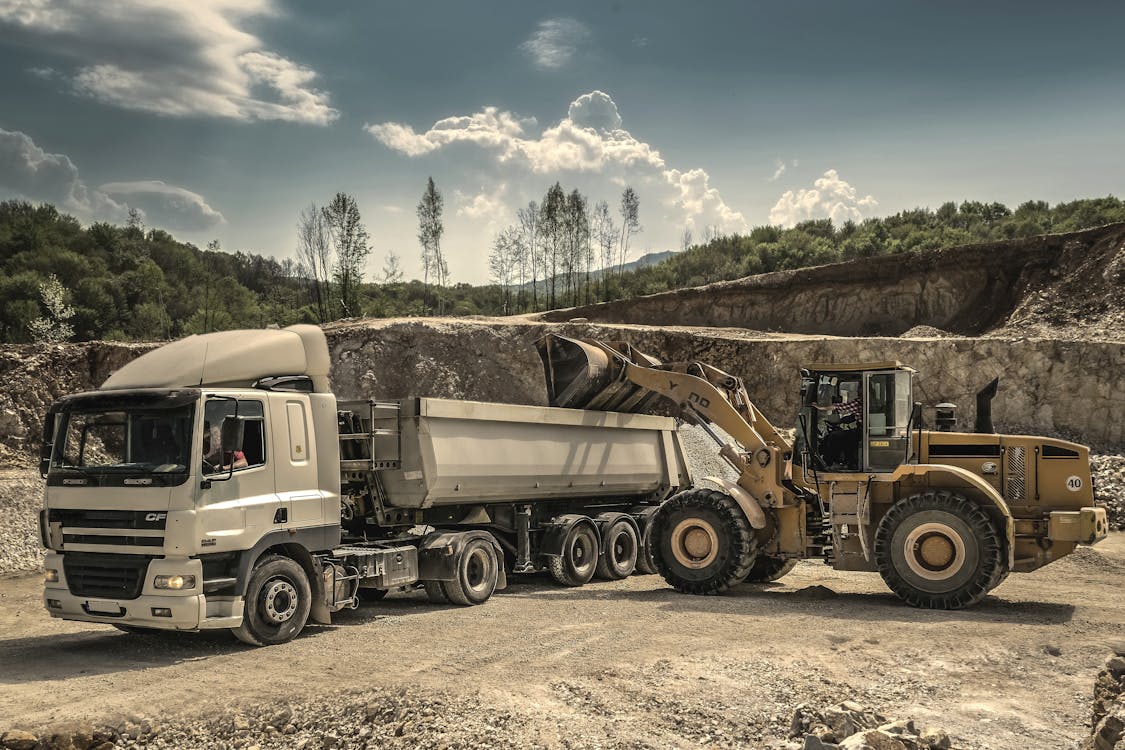
Any business-to-business invoice for construction material transportation qualifies for aggregate factoring, including hauling sand, gravel, crushed stone, topsoil, asphalt, concrete, recycled materials, and other bulk construction materials. The service applies to dump truck operators, aggregate haulers, material transportation companies, and owner-operators serving construction sites, paving contractors, concrete plants, and material suppliers.[4]
Qualifying invoices must represent completed work with proper documentation. This includes delivery tickets signed by the receiving party, weight tickets from certified scales, bills of lading, and purchase orders or load confirmations. The customer must be a creditworthy commercial entity — factoring companies evaluate the payment reliability of construction companies, contractors, and material suppliers, not the hauler’s credit history.[1]
Most factoring companies accept both spot deliveries and contract work. Regional hauling, local deliveries, and long-distance aggregate transport all qualify. The key distinction from traditional trucking services is documentation: aggregate haulers should maintain detailed records of material type, quantity (tons or cubic yards), delivery location, and customer authorization for each load.
How Much Do Aggregate Factoring Services Cost?
Aggregate factoring fees typically range from 1.5% to 5% of the invoice value, with rates determined by invoice volume, customer creditworthiness, payment terms, and whether the arrangement is recourse or non-recourse factoring. Cooperative factoring companies often provide rates below 2.20% for members with consistent volume, compared to 3-5% at commercial factoring firms.[2]
| Factor Type | Typical Rate Range | Advance Percentage | Additional Benefits |
|---|---|---|---|
| Cooperative (Member-Owned) | 1.5% – 2.2% | 90-95% | Patronage dividends, fuel discounts |
| Commercial Factoring Company | 2.5% – 5% | 85-90% | Broader service area |
| Bank Factoring Programs | 2% – 4% | 80-85% | Established banking relationship |
| Online Factoring Platforms | 3% – 6% | 85-90% | Fast digital processing |
Non-recourse factoring, where the factoring company assumes the credit risk if a customer fails to pay, typically costs 0.5-1% more than recourse factoring. However, this premium protects aggregate haulers from bad debt losses. Volume discounts apply at most factoring companies — haulers factoring $50,000 or more monthly often receive rates 0.5-1% lower than smaller operators.[3]
Hidden fees can significantly increase costs. Reputable factoring companies charge no application fees, setup fees, monthly minimums, or termination penalties. Transparent pricing with a single factoring rate per invoice is standard practice among member-owned cooperatives that prioritize hauler profitability over maximizing fee revenue.
What Are the Benefits of Factoring for Dump Truck Operators?
Factoring provides dump truck operators with immediate working capital, eliminates credit risk, reduces administrative burden, and enables business growth without taking on debt. The most immediate benefit is converting 30-60 day payment terms into same-day or next-day cash, allowing operators to pay fuel bills, make equipment payments, cover payroll, and accept new loads without cash flow gaps.[5]
Credit risk protection is particularly valuable in construction material hauling, where project delays, contractor disputes, or customer financial problems can result in slow payment or non-payment. Non-recourse factoring transfers this risk to the factoring company, protecting the hauler’s cash flow even if a construction company fails to pay. This protection is especially important for smaller operators who cannot absorb significant bad debt losses.[6]
Administrative savings include outsourced credit checks, collections, and payment processing. Instead of spending hours calling customers about overdue invoices, operators focus on moving material and building customer relationships. The factoring company handles payment follow-up, account reconciliation, and collection efforts. Many factoring companies also provide fuel programs and other services that streamline operations for their clients.
Growth becomes possible without bank loans or equity investment. Factoring provides capital that scales with revenue — more loads mean more invoices to factor and more immediate cash. This allows dump truck operators to add equipment, hire drivers, or expand service areas using their own earnings rather than taking on fixed debt obligations.
Can Small Aggregate Haulers Qualify for Factoring Services?
Small aggregate haulers, including single-truck owner-operators, qualify for factoring services based on their customers’ creditworthiness rather than their own credit scores or business history. This makes factoring accessible to new businesses, operators with limited credit history, and haulers recovering from past financial difficulties.[1]
The application process focuses on customer quality, not hauler qualifications. Factoring companies evaluate the payment history and financial stability of the construction companies, contractors, and material suppliers that owe the invoices. A startup dump truck operator hauling for established commercial customers with strong payment records can access factoring immediately, often without any minimum volume requirements or long-term contracts.
Cooperative factoring companies, structured as member-owned organizations, often provide the most favorable terms for small operators. Members benefit from profit-sharing through patronage dividends, which return excess revenue based on factoring volume. These dividends effectively reduce the net cost of factoring and align the company’s interests with member success. Member governance ensures policies serve hauler needs rather than maximizing investor returns.[2]
How Does Aggregate Factoring Compare to Traditional Business Loans?
Aggregate factoring provides faster access to capital, requires no collateral or personal guarantees, does not create debt on the balance sheet, and approval depends on customer creditworthiness rather than the hauler’s financial history. These differences make factoring particularly attractive for growing businesses, seasonal operators, and haulers who cannot qualify for traditional bank financing.[7]
Bank loans require extensive documentation, strong credit scores, collateral, and often personal guarantees from business owners. The approval process takes weeks or months, and loan terms remain fixed regardless of business volume. Monthly payments are due whether revenue is strong or weak. In contrast, factoring approval takes 24-48 hours, costs scale with revenue (factor more when hauling more, factor less during slow periods), and no personal credit check or collateral is required.[8]
Factoring is not a loan — it is the sale of an asset (accounts receivable). This distinction means factoring does not increase debt ratios or affect future borrowing capacity. Haulers can use factoring while also maintaining credit lines or equipment loans for other purposes. The flexibility to factor individual invoices rather than committing to minimum volumes makes factoring ideal for operators with fluctuating workloads or seasonal business patterns common in construction material hauling.
For operators interested in equipment acquisition, leasing programs can complement factoring by providing predictable equipment costs while factoring provides working capital for day-to-day operations.
Need immediate cash flow for your aggregate hauling business? Call TCE at (704) 527-1820 or visit https://www.tceast.com/contact to learn how our cooperative model can improve your cash flow.
Frequently Asked Questions
Can I factor invoices for hauling recycled aggregate materials?
Yes, invoices for hauling recycled concrete, asphalt millings, recycled aggregate base, and other reclaimed construction materials qualify for factoring. The same documentation requirements apply — delivery tickets, weight slips, and customer authorization. Factoring companies evaluate the creditworthiness of the customer purchasing the transportation service, not the material type being hauled.
How quickly can I start factoring aggregate hauling invoices?
Most aggregate haulers can begin factoring within 24-48 hours of application approval. The application process requires basic business information, customer references, and sample invoices with supporting documentation. Once approved, you can submit invoices immediately and receive funding the same day or next business day, depending on submission timing and bank processing schedules.
Do I need to factor every invoice or can I choose which ones to factor?
Factoring arrangements vary by company. Some require factoring all invoices from approved customers (whole ledger factoring), while others allow selective factoring of individual invoices (spot factoring). Cooperative factoring companies often provide more flexibility, allowing members to factor only when they need immediate cash flow while direct-billing customers who pay promptly.
What happens if my customer disputes the invoice or delivery?
Legitimate disputes are resolved between you, the customer, and the factoring company. In recourse factoring, you remain responsible for invalid invoices and must return the advance if the dispute cannot be resolved. Non-recourse factoring protects you from credit risk but typically not from disputes related to delivery issues, incorrect quantities, or service problems. Maintaining accurate documentation and clear communication with customers minimizes dispute risk.
Can I factor invoices for both aggregate hauling and other trucking services?
Yes, most factoring companies that serve aggregate haulers also factor traditional freight bills, flatbed loads, and other trucking services. This flexibility is valuable for operators who haul both construction materials and general freight. Specialized aggregate services can be combined with standard trucking services under a single factoring arrangement, simplifying cash flow management across different revenue streams.
Ready to improve cash flow for your construction material hauling business? Call TCE at (704) 527-1820 or visit https://www.tceast.com/contact to learn how our cooperative model can improve your cash flow.
Written by Joel Ledford — General Manager, Transport Clearings East, Inc. — serving the trucking industry since 1958. Updated January 2026.
References
- U.S. Small Business Administration. Accounts Receivable Financing. https://www.sba.gov/business-guide/manage-your-business/manage-business-finances
- Commercial Finance Association. Invoice Factoring Guide for Transportation Companies. https://www.cfa.com/
- Federal Motor Carrier Safety Administration. Financial Management for Small Trucking Companies. https://www.fmcsa.dot.gov/
- National Stone, Sand and Gravel Association. Construction Aggregates Industry Guide. https://www.nssga.org/
- U.S. Department of Transportation. Owner-Operator Business Management Resources. https://www.transportation.gov/
- International Factoring Association. Non-Recourse Factoring Benefits and Costs. https://www.factoring.org/
- Federal Reserve Bank. Small Business Credit Survey: Financing Challenges in Transportation. https://www.fedsmallbusiness.org/
- U.S. Government Accountability Office. Small Business Financing Options and Market Conditions. https://www.gao.gov/