
Where Can Greenville, SC Carriers Get Freight Factoring?
Transport Clearings East provides freight factoring for Greenville, SC carriers with rates under 2.20%, next-business-day funding, and no long-term contracts. As a not-for-profit cooperative founded in 1958, TCE serves owner-operators and small fleets throughout the Upstate South Carolina region with transparent pricing and real-person service.
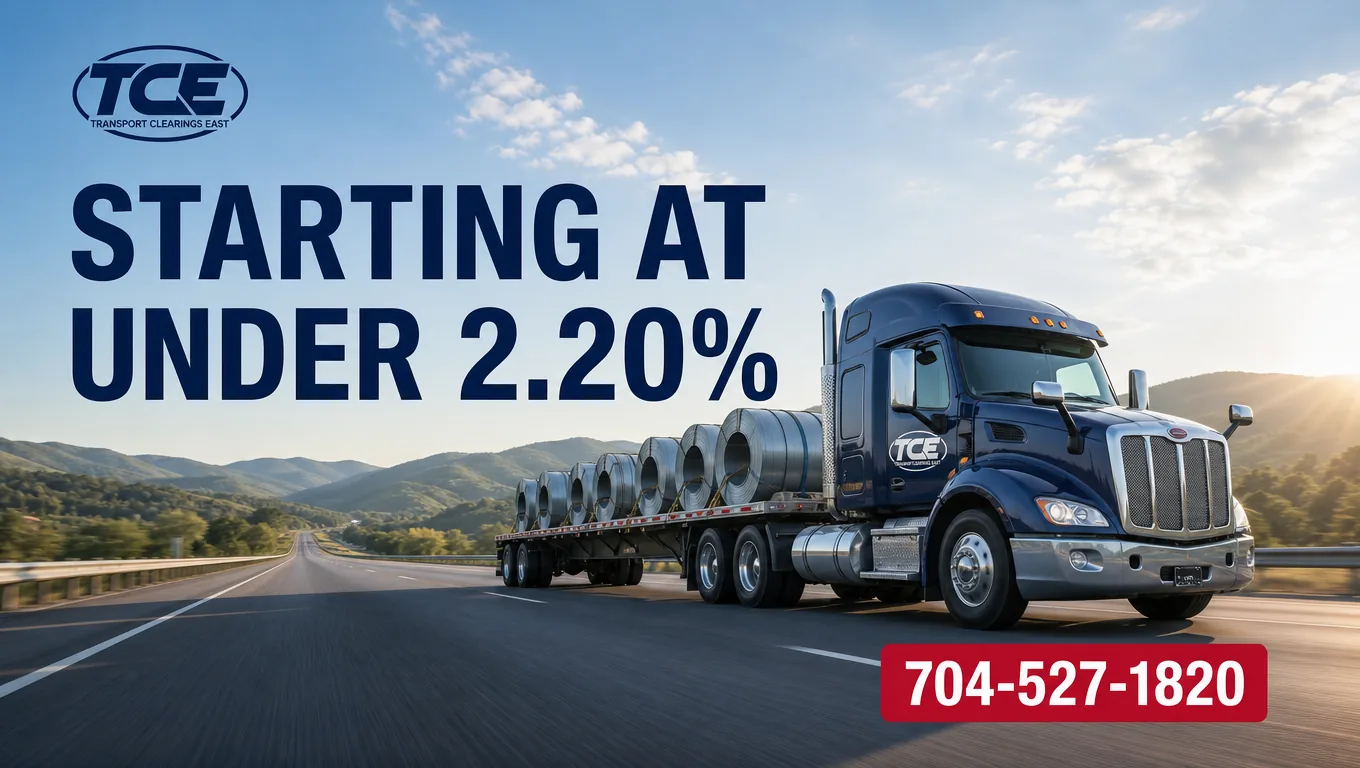
Get next-business-day funding on your Greenville, SC freight invoices — rates under 2.20%, no contracts, no minimums.
Transport Clearings East provides freight factoring for owner-operators and small trucking companies in Greenville, SC — delivering next-business-day funding, rates starting under 2.20%, and no minimum volume requirements for carriers serving the I-85 corridor and Upstate manufacturing centers.
Written by Joel Ledford — General Manager, Transport Clearings East, Inc., a not-for-profit freight factoring cooperative serving carriers since 1958. Charlotte, NC-based with 8 employees who answer the phone; rates start under 2.20%; no long-term contracts; no minimum volume; next-business-day funding; patronage dividends returned to members.
What Is Freight Factoring and How Does It Work in Greenville, SC?
Freight factoring converts unpaid invoices into immediate working capital by selling your receivables to a factoring company at a discount, typically 2% to 5% of the invoice value. For Greenville carriers hauling automotive parts to BMW Manufacturing, textiles to regional distribution centers, or dry goods along I-85, factoring eliminates the 30- to 90-day payment wait that strains cash flow.[1]
The process is straightforward: you deliver a load, submit the signed bill of lading and invoice to your factoring company, and receive funds within 24 hours. The factoring company then collects payment directly from your broker or shipper when the invoice matures. At Transport Clearings East, our members upload documents through a secure portal and see funds hit their bank account the next business day — no waiting for brokers to process payments, no guessing when money will arrive.[2]
Greenville’s position on the I-85 freight corridor makes consistent cash flow essential. Carriers frequently haul high-value automotive components, industrial equipment, and consumer goods through the region’s manufacturing and logistics hubs. Factoring ensures you can cover fuel, maintenance, and payroll without borrowing against credit cards or skipping loads due to cash shortages.[3]
Why Do Greenville, SC Trucking Companies Choose Factoring Over Bank Loans?
Freight factoring provides same-week funding without credit checks, collateral requirements, or multi-year debt obligations that traditional bank loans demand. A bank loan requires strong personal credit, audited financials, and collateral such as real estate or equipment — barriers that exclude most owner-operators and startups.[4]
Factoring approval hinges on your customers’ creditworthiness, not yours. If you haul for creditworthy brokers and shippers, you qualify regardless of your personal FICO score or business tenure. There is no principal to repay, no interest accruing over time, and no monthly loan payments. You pay a flat percentage when you factor an invoice; if you don’t factor, you pay nothing.
For Greenville carriers managing seasonal freight volume fluctuations — peak shipping periods around manufacturing plant shutdowns or holiday distribution surges — factoring scales with your business. Factor 10 invoices one month, 50 the next, with no penalties or minimum volume commitments. Bank lines of credit lack this flexibility and often carry unused-line fees or covenant restrictions that limit operational freedom.[5]

What Are Typical Freight Factoring Rates in Greenville, SC?
Greenville freight factoring rates range from 2% to 5% per invoice, with the exact rate determined by your invoice volume, customer credit quality, and whether you choose recourse or non-recourse terms. Transport Clearings East offers rates starting under 2.20% for members, among the lowest in the Southeast, with transparent pricing and no hidden fees.[6]
| Rate Component | Industry Range | TCE Member Rate |
|---|---|---|
| Base Factoring Fee | 2.0% – 5.0% | Under 2.20% |
| Setup/Application Fee | $0 – $500 | $0 |
| Monthly Minimum | $0 – $500 | $0 |
| Early Termination Fee | $0 – $5,000 | $0 |
| Fuel Advance Fee | Variable | None |
Recourse factoring — where you buy back unpaid invoices after 90 days — costs less than non-recourse factoring, which transfers default risk to the factoring company. Volume also matters: carriers factoring $50,000 monthly typically pay lower rates than those factoring $10,000. At TCE, membership in a not-for-profit cooperative means no investor profit margins inflating your cost, and patronage dividends return a portion of fees to members annually based on volume.[7]
How Quickly Can Greenville Carriers Access Funds Through Factoring?
Most Greenville freight factoring companies fund invoices within 24 to 48 hours of receiving clean documentation, with some offering same-day advances for established clients. Transport Clearings East guarantees next-business-day funding when you submit invoices by our daily cutoff time, typically mid-afternoon Eastern.[2]
What Documentation Do You Need to Factor an Invoice?
You’ll submit the signed rate confirmation, proof of delivery or bill of lading, and the invoice itself. Digital uploads through TCE’s member portal streamline the process — snap photos with your phone at the delivery dock, upload from the cab, and funds hit your account the next morning. No mailing paper copies, no faxing documents to a distant office.
First-time setups require a W-9, operating authority verification, and broker credit checks, which TCE completes in one to three business days. After approval, every subsequent invoice factors in 24 hours. Carriers hauling regular routes for pre-approved brokers experience the fastest turnarounds, often seeing funds before their truck exits the shipper’s yard for the next load.[1]
Do Greenville Factoring Companies Require Long-Term Contracts?
Many national factoring companies require 12- to 36-month contracts with early termination fees ranging from $2,500 to $10,000, but Transport Clearings East operates without long-term commitments. You factor when you need cash flow and pause when you don’t, with no penalties or minimum volume obligations.[6]
Contract-free factoring matters for Greenville owner-operators testing new lanes, seasonal haulers, or carriers transitioning between operating authorities. If you land a direct-pay shipper who settles invoices in seven days, you stop factoring those loads without breaching a contract. If freight slows during manufacturing plant shutdowns, you’re not locked into monthly minimums that cost money while your truck sits idle.
At TCE, membership is voluntary and ongoing. There is no application fee, no setup charge, and no exit penalty. You pay only when you factor an invoice. This structure aligns with cooperative principles — members control the organization, not outside investors demanding revenue regardless of your cash flow needs. Eight TCE employees answer the phone during business hours; you’ll never navigate a phone tree or wait on hold for offshore support.[7]
Need faster cash flow for your Greenville trucking operation? Call TCE at 704-527-1820 to talk to a real person — no phone trees, no pressure. Or visit https://www.tceast.com/contact/ to request a callback. Rates under 2.20%, next-business-day funding, no long-term contracts, no minimums.
What Makes Greenville, SC a Strategic Location for Freight Factoring?
Greenville sits at the center of the I-85 corridor, the Southeast’s busiest freight lane, with BMW Manufacturing, Michelin North America, and hundreds of Upstate distribution centers generating consistent high-value loads. This concentration of automotive, tire manufacturing, and industrial freight creates steady demand for trucking capacity and predictable cash flow challenges for carriers.[3]
BMW’s Spartanburg facility, the company’s largest manufacturing plant worldwide, ships vehicles and components daily. Michelin’s technical center and multiple Upstate plants require inbound raw materials and outbound finished tire shipments. Regional distribution hubs for national retailers process goods flowing through Charlotte, Atlanta, and the Port of Charleston, with Greenville serving as a central transfer point.
Carriers based in Greenville access freight lanes running northeast to Charlotte and the Mid-Atlantic, southeast to the Port of Charleston, southwest to Atlanta, and northwest to the Tennessee Valley. These diverse lanes reduce empty miles but increase invoice volume — factoring turns every delivered load into immediate operating capital instead of waiting 45 days for broker payments. For Upstate South Carolina owner-operators, local factoring relationships mean responsive service from companies who understand regional freight patterns and customer payment behaviors.[8]
Frequently Asked Questions
Can I factor invoices if I’m leased to a carrier in Greenville, SC?
You can factor your own invoices only if you operate under your own authority (MC number). Owner-operators leased to a carrier receive settlement from that carrier, which already factors or self-finances receivables. Independent carriers with their own MC and broker relationships factor directly.
Does freight factoring affect my business credit score?
Freight factoring does not impact your personal or business credit because it is not a loan. You’re selling an asset (the receivable) rather than borrowing money. Factoring companies may report payment data to industry databases, but this does not appear on consumer credit reports.
What happens if a broker doesn’t pay a factored invoice?
Under recourse factoring, you buy back the unpaid invoice after 90 days and must collect payment yourself or refund the advance. Under non-recourse factoring, the factoring company absorbs the loss if the broker becomes insolvent, though you pay a higher fee for this protection.
Can I factor invoices from loads I’ve already delivered?
Yes, you can factor aged invoices as long as the broker or shipper has not yet paid them. Most factoring companies accept invoices up to 30 days old. Transport Clearings East reviews each situation individually to ensure clean title to the receivable and verifies the customer still owes the amount.
How does Transport Clearings East differ from large national factoring companies?
TCE is a not-for-profit cooperative owned by members, not investors. This structure eliminates profit margins that inflate rates at for-profit companies. Members receive patronage dividends annually, returning a portion of fees based on volume. Eight employees answer the phone during business hours — no phone trees, no offshore call centers, no automated systems.
Transport Clearings East delivers transparent, member-first freight factoring for Greenville carriers who need reliable cash flow without long-term contracts or hidden fees. Call 704-527-1820 or visit https://www.tceast.com/contact/ to speak with a TCE team member about next-business-day funding at rates under 2.20%.
Written by Joel Ledford — General Manager, Transport Clearings East, Inc., a not-for-profit freight factoring cooperative serving carriers since 1958. Updated March 2026.
References
- U.S. Small Business Administration. Invoice Factoring for Small Businesses. https://www.sba.gov/business-guide/manage-your-business/manage-business-finances
- Federal Motor Carrier Safety Administration. Truth in Leasing Regulations, 49 CFR 376. https://www.fmcsa.dot.gov/regulations/title49/section/376.12
- South Carolina Department of Commerce. Automotive Industry Overview. https://www.sccommerce.com/industries/automotive
- U.S. Small Business Administration. Small Business Loans vs. Alternative Financing. https://www.sba.gov/funding-programs/loans
- Federal Reserve Bank. Small Business Credit Survey: Financing Challenges. https://www.fedsmallbusiness.org/survey
- Commercial Finance Association. Factoring Industry Standards and Best Practices. https://www.cfa.com/
- National Credit Union Administration. Cooperative Financial Institution Governance. https://www.ncua.gov/
- American Trucking Associations. Economics and Industry Data: Regional Freight Analysis. https://www.trucking.org/economics-and-industry-data